
When the Status Quo Isn't
Every fall, Tulsa Community College holds Convocation — a State of TCC address, some breakout sessions that could double as a sleep study, and a guest speaker who's usually selling something. Most years, I tune it out. This year, one sentence didn't let me. "Whatever you're not changing, you're choosing." It sent me back through thirteen years of a second marriage, thirteen separate wedding ceremonies, and a heart attack I'd been pretending wasn't connected to any of it. This is the math I finally did, and what it actually means to own a choice instead of explaining it away.

The Grader Never Retires
Summer of 1978. Voluntary off-season workouts, the kind where just showing up already tells your coach something about you.
I stuck around after mine ended, throwing the ball with a couple of friends. One of them had a brother-in-law on break from the Denver Broncos — a wide receiver, a few seasons in, wanting to run some routes to stay sharp. No quarterbacks around. So I volunteered.
That's a habit of mine. When nobody else wants to step up, I do.
I started hitting him on routes — the deep ones, mostly. Corners, posts, fly patterns, the throws that travel forty, fifty, sixty yards downfield to a guy fast enough to actually get under one. He indulged my ego a little. Told me I had real potential. I enjoyed it. No big deal.
Except it was a big deal, because my head coach was watching the whole thing. Watching how I threw it deep. Watching the accuracy.
He let it play out, let us wind down, then found me afterward. I was heading into my senior year. He wanted me at quarterback.
I said yes before he finished the sentence. I'm a team guy. Whatever they need, I do.
He took a real risk on that. No experience at the position, one summer of work, study, conditioning, and whatever grit I had left standing between me and the job — and by the time the season opened, I was the starter. It worked. Or worked enough. Coach believed in me that much. That did something to my confidence I hadn't expected going in.
What happened next took me forty years to fully understand.

Paper Eighty-Seven
It's eleven o'clock on a Thursday night, and there's still thirty-three papers to go. Nobody's counting whether I give the real feedback or the easy kind. This piece is about that choice — what Frankl and Psychological Capital have to say about meaning that's built, not felt, in the moments no one's watching.

The One Thing "Bucket" Had
Bucket could forgive himself.
Not eventually. Not after sufficient processing, adequate reflection, and a therapeutic breakthrough on a Tuesday afternoon. Almost immediately. He made a mistake — and there were many — and then he let it go. Not because he was oblivious to it. Not because he lacked the self-awareness to recognize it. He simply refused to weaponize it against himself.
What he had wasn't the absence of a conscience.
It was the refusal to let his conscience become a weapon.

The Identity Trap: Why the Pile Doesn’t Survive on Its Own
I don't think the pile was sustaining itself anymore. I was.
That's an uncomfortable sentence to write — and it's where Article 10 begins. For nine articles, I operated on a quiet assumption I never bothered to examine: that the pile persists on its own. That it has weight. Inertia. Squatter's rights. It doesn't. The pile doesn't survive because it's true. It survives because something keeps feeding it.
This piece is about the trap underneath that discovery — how the Law of Sustainment, Imposter Phenomenon, and low self-esteem quietly conspire into a self-sealing system where every escape attempt gets processed by the very identity the escape was supposed to change. It's about why trying harder was never going to work, what kind of decision actually breaks the seal, what holds you upright while the ratio shifts — and the one question the whole framework can't answer without going deeper than psychology can reach.
The credentials stayed on the wall. The wall came down anyway.

Narrative Lag: When the Story You Survived Becomes the Story Holding You Back
Some stories outlive the person who needed them. Not because they were false — but because nobody ever told them their shift was over. A reflection on Narrative Lag, the evidence we've been ignoring, and what it actually takes to reclaim authorship of your own life.

Why Did It Take Us So Long?
How can capable, accomplished people spend decades collecting evidence of their worth and still struggle to believe it? A reflection on credentials, Imposter Phenomenon, and finally meeting yourself after a lifetime of becoming someone.

Jung Named the Pile. The HERO Framework Handed Me the Shovel.
Insight can explain the wound, but explanation alone rarely heals it. This article explores the gap between understanding ourselves and developing the psychological resources required to actually move forward.

The Cost of Carrying Things Nobody Sees
Emotional weight rarely announces itself. It accumulates quietly—in responsibilities, grief, caregiving, expectations, and unspoken burdens—until the body begins telling the story the mouth never did.

Real Hope Has Dirt Underneath Its Fingernails
Hope is often treated like a feeling that arrives when circumstances improve. Real hope is different. It laces up its shoes, leaves the couch, and starts moving long before the feelings catch up.

Paralysis With a Graduate Vocabulary
What happens when high intelligence, ADHD, and Imposter Phenomenon occupy the same mind? Sometimes the greatest obstacle isn't ignorance—it's having enough knowledge to build convincing arguments against yourself.

The Gap Nobody Talks About
Insight is valuable, but insight alone rarely changes anything. This article explores the uncomfortable space between understanding our patterns and actually doing something different about them.

Why Nothing Changes Until You Change
Most people try harder when life isn't working. The real challenge isn't effort—it's identity. Lasting change begins when we stop managing symptoms and start changing the patterns that created them.
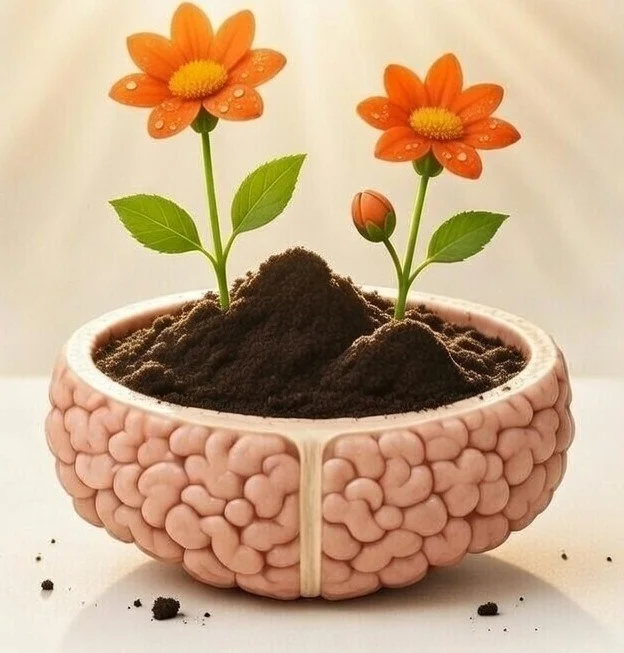
Everyone Has Their Own Pile of S#!t
We all have a pile—old wounds, bad habits, limiting beliefs, and emotional baggage we carry through life. The pile itself isn't the problem. The problem is what happens when we stop pretending it's there and start deciding what to do with it.